
According to the Japan Institute for Health Crisis Management (JIHS), Japan reported 13,294 new syphilis cases in 2025, marking the fourth consecutive year of sustained high incidence — a more than tenfold increase compared to approximately 1,000 cases in 2013. The WHO reported in 2024 that syphilis remains a major public health challenge, with over 12 million new infections and more than 220,000 related deaths worldwide each year, underscoring the ongoing challenges in global disease control.
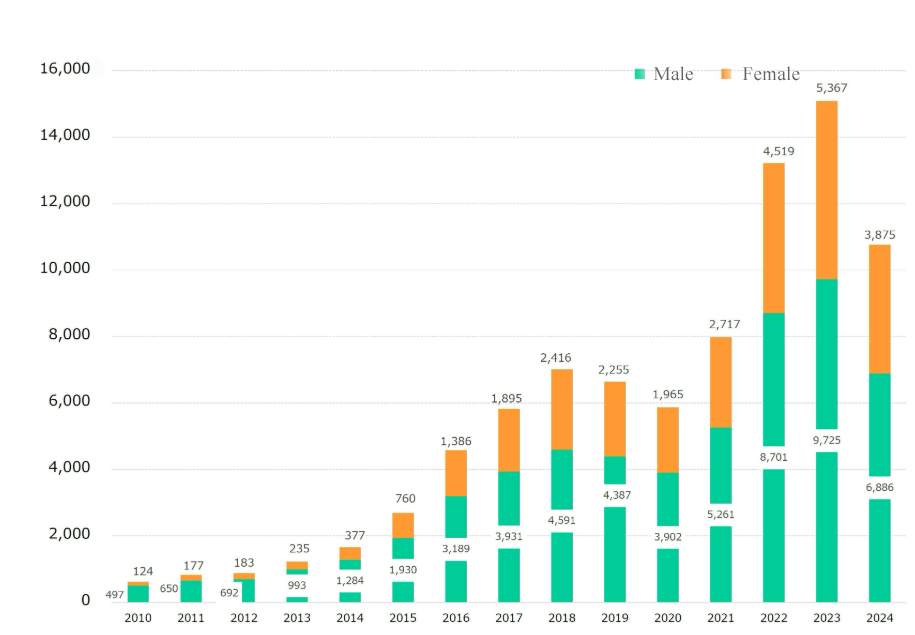
Fig. Epidemiological Data of Syphilis in Japan
✨Cnpair’s Syphilis Diagnostic Solutions✨
| Cnpair is dedicated to the research, development and supply of high-quality IVD raw materials for sexually transmitted diseases. We have now completed a comprehensive upgrade of our syphilis-related raw materials. We can offer flexible antigen combination options, including both chimeric recombinant antigens and single fragment antigens (TP47, TP15 and TP17) as well as bulk reagent formats, enabling assay manufacturers to optimize assay performance and enhance product competitiveness. Validation data from Cnpair’s internal chemiluminescence immunoassay (CLIA) platform are as follows: |
🔬Clear Differentiation Between Sample Populations
Following raw material validation and CLIA optimization. The distribution of reactivity values between seronegative and seropositive specimens was clearly separated, with no overlap, indicating high diagnostic accuracy of the anti-syphilis assay for all strategies.
Tab. Cnpair Syphilis Raw Materials Solution

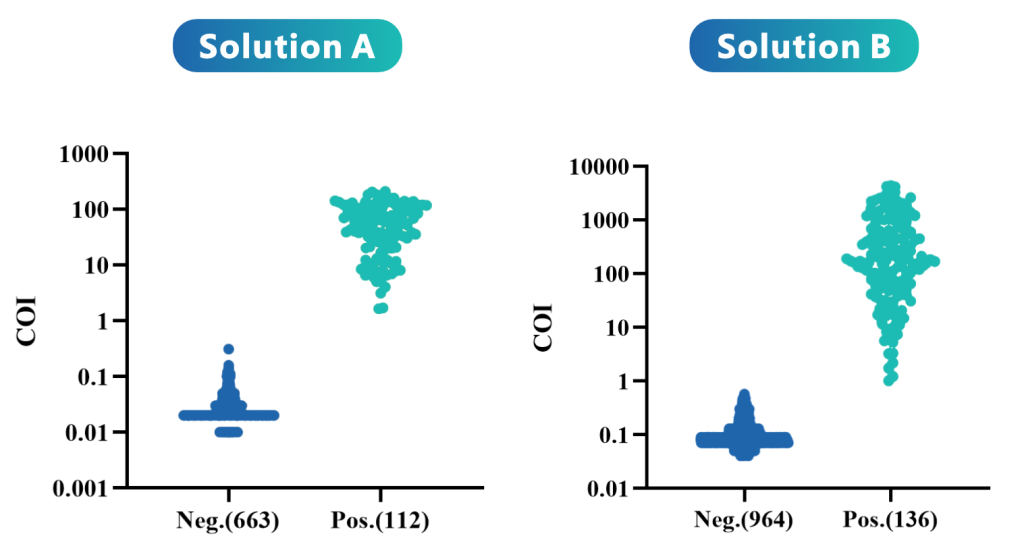
Fig. Data distribution obtained for negative and positive samples
🔍Comprehensive Disease Stage Coverage
TP47, TP15 and TP17 antigens enable accurate identification of syphilis-specific antibodies, ensuring reliable detection across all stages of infection—from early to late syphilis. Furthermore, this assay remains unaffected by variations in individual immune responses or the presence of autoimmune conditions, minimizing the risk of cross-reactivity or interference.
🛡️Superior Stability Under Accelerated Conditions
The CLIA for syphilis antibody detection exhibited excellent thermal stability, with an activity loss rate of less than 20% for both solutions: 9 days at 37°C for Solution A and 12 days at 37°C for Solution B.
-1024x506.png)
Fig. Thermal stability of the anti-syphilis chemiluminescent immunoassay at 37°C(Solution A)
💡To empower your research, we offer Free Samples
👉Learn more about our STD raw materials, please click here