

1. Global Cancer Burden and the Importance of Lung Cancer Detection
Cancer remains one of the leading causes of death worldwide, posing a significant challenge to global public health. According to the World Health Organization (WHO) and the International Agency for Research on Cancer (IARC), approximately 20 million new cancer cases and 9.7 million cancer-related deaths were reported worldwide in 2024.

Among all cancer types, lung cancer ranked first in incidence, accounting for approximately 2.48 million new cases, or 12.4% of all new cancer diagnoses. It was followed by female breast cancer (2.30 million cases), colorectal cancer (1.93 million cases), prostate cancer (1.47 million cases), and stomach cancer (969,000 cases).
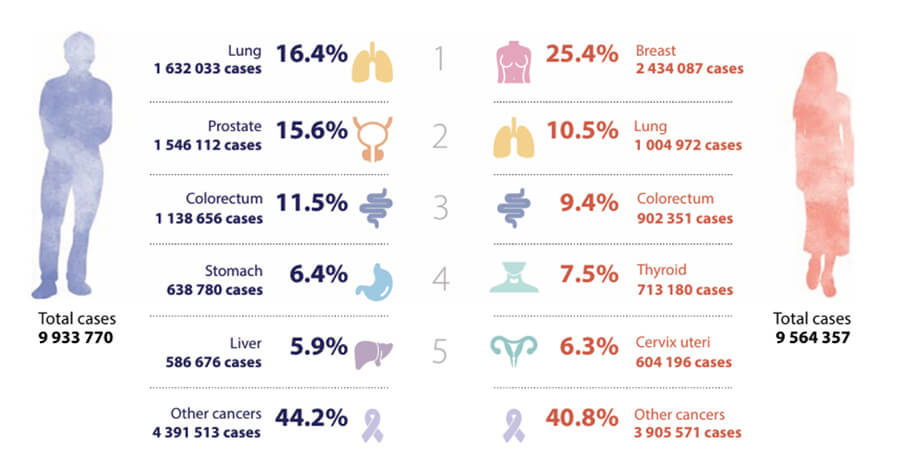
Lung cancer is also the leading cause of cancer-related deaths worldwide. Early detection plays a critical role in improving patient outcomes. According to the US National Cancer Institute’s SEER data, the five-year relative survival rate for localized lung cancer is approximately 65.5%, highlighting the importance of identifying the disease before it spreads.
Currently, lung cancer detection and diagnosis rely on a combination of imaging examinations, pathological assessment, and laboratory testing. Among these approaches, serum tumor marker testing offers several advantages, including convenience, minimal invasiveness, and suitability for repeated monitoring. It can complement imaging and pathological examinations, providing additional information for clinical assessment.
Commonly used serum tumor markers for lung cancer include:
- Pro-gastrin-releasing peptide (ProGRP)
- Neuron-specific enolase (NSE)
- Cytokeratin 19 fragment antigen 21-1 (CY21-1)
- Squamous cell carcinoma antigen (SCC )
- Carcinoembryonic antigen (CEA)
These lung cancer biomarkers can support clinical assessment, differential diagnosis, histological classification, treatment monitoring, and disease progression evaluation. However, no single serum tumor marker is sufficient to independently confirm or exclude lung cancer. Results should always be interpreted alongside clinical findings, imaging, and pathological evidence.
2. Five Common Lung Cancer Tumor Markers and Their Clinical Applications
2.1 ProGRP (Pro-Gastrin-Releasing Peptide)

Gastrin-releasing peptide (GRP) is a gastrointestinal regulatory peptide involved in stimulating gastrin secretion. However, GRP has a relatively short half-life and limited stability, making it difficult to measure reliably in clinical samples.Pro-gastrin-releasing peptide (ProGRP), a more stable precursor of GRP, is therefore widely used as a serum biomarker, particularly for small cell lung cancer (SCLC).
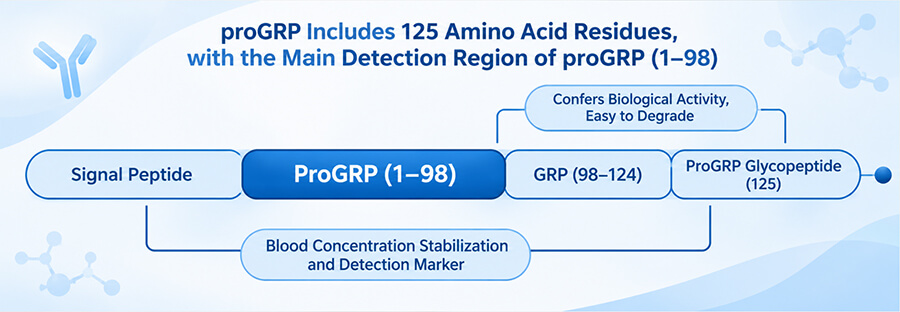
ProGRP is expressed in various tissues, including the gastrointestinal tract, lungs, and nervous system. Among commonly used lung cancer tumor markers, ProGRP demonstrates relatively high diagnostic specificity for SCLC and can help distinguish SCLC from non-small cell lung cancer (NSCLC) and benign pulmonary diseases.
Its serum concentration is also associated with SCLC disease stage, making it potentially useful for disease assessment and monitoring.However, elevated ProGRP levels are not exclusive to SCLC. Increased concentrations may also occur in medullary thyroid carcinoma, colorectal cancer, breast cancer, and prostate cancer, although elevations in these conditions are generally less pronounced.
Certain benign conditions involving the urinary and respiratory systems may also contribute to elevated ProGRP levels. Renal impairment is particularly important because reduced renal clearance can significantly increase serum ProGRP concentrations, potentially leading to false-positive results.
2.2 NSE (Neuron-Specific Enolase)

Neuron-specific enolase (NSE) is a glycolytic enzyme involved in glucose metabolism. It catalyzes the conversion of 2-phosphoglycerate into phosphoenolpyruvate and is predominantly expressed in neurons and neuroendocrine cells. Under normal physiological conditions, NSE activity is relatively high in nervous tissue but low in most non-neural tissues and circulating serum.
During tumor development and progression, increased cellular proliferation and metabolic activity may promote the release of NSE into the bloodstream, resulting in elevated serum concentrations.
NSE is an important serum tumor marker for small cell lung cancer (SCLC). Studies have reported diagnostic positivity rates ranging from approximately 65% to 100%, depending on the study population, assay method, and diagnostic criteria.
Serum NSE levels are generally higher in patients with SCLC than in those with lung adenocarcinoma, lung squamous cell carcinoma, or large cell lung carcinoma. When histopathological findings are inconclusive, NSE can provide additional information to support the differential diagnosis of SCLC. Nevertheless, elevated NSE is not specific to lung cancer. It may also occur in other neuroendocrine tumors, including neuroblastoma, pheochromocytoma, medullary thyroid carcinoma, and melanoma, as well as in certain neurological conditions such as cerebral infarction and meningitis.
Hemolysis is a particularly important preanalytical factor in NSE testing, as red blood cells and platelets contain NSE and can release it into serum during sample damage. Improper blood collection or sample handling may therefore result in falsely elevated NSE levels. Appropriate sample collection and prompt serum separation are essential for reliable results.
2.3 CY21-1 (Cytokeratin 19 Fragment)

Cytokeratin 19 is the smallest member of the cytokeratin family and is primarily expressed in epithelial cells, particularly those forming simple and stratified epithelial tissues. During malignant transformation and tumor progression, increased cellular turnover and proteolytic degradation can promote the release of cytokeratin fragments into the bloodstream.
CY21-1 is a soluble fragment of cytokeratin 19 that is specifically recognized by two monoclonal antibodies, BM19.21 and KS19.1. It is widely used as a serum biomarker in lung cancer assessment. Elevated CY21-1 concentrations are commonly observed in patients with lung cancer, particularly those with squamous cell carcinoma. Reported positivity rates are approximately 67% for lung squamous cell carcinoma, 46% for lung adenocarcinoma, and 67% for large cell lung carcinoma, although these figures vary across clinical studies. Its sensitivity is generally lower in SCLC.
CY21-1 is therefore particularly useful as an auxiliary biomarker for lung cancer assessment and histological differentiation, especially in NSCLC. However, elevated CY21-1 levels are not limited to malignant diseases. Various epithelial and mesenchymal tumors may also contribute to increased concentrations.
Certain benign conditions, including pneumonia, tuberculosis, sepsis, liver cirrhosis, and renal failure, can also cause elevated CY21-1 levels. These potential confounding factors should be considered when interpreting test results.
2.4 SCC (Squamous Cell Carcinoma Antigen)

Squamous cell carcinoma antigen (SCC or SCCA) is a member of the serine protease inhibitor (serpin) superfamily. It was originally identified as a subfraction of the tumor-associated antigen TA-4 isolated from cervical squamous cell carcinoma tissue. SCC is expressed in both normal and malignant epithelial tissues, particularly squamous epithelial cells. It is associated with cellular differentiation, apoptosis regulation, and tumor progression.
In clinical practice, SCC is primarily used as an auxiliary biomarker for squamous cell carcinomas originating from different tissues, including the lung, cervix, esophagus, and head and neck.
In lung cancer, its most important application is supporting histological classification. The reported positivity rate of SCC in lung squamous cell carcinoma is approximately 60%, compared with less than 30% in other major lung cancer subtypes.
However, SCC levels may also increase in several non-malignant conditions. Chronic kidney disease is an important cause of false-positive SCC results, with serum concentrations and positivity rates potentially increasing as renal function deteriorates. Other conditions associated with elevated SCC levels include:
- Skin disorders, such as eczema and psoriasis
- Infectious and inflammatory diseases
- Hepatitis and liver cirrhosis
- Other benign epithelial conditions
Preanalytical factors should also be considered. Contamination of specimens with respiratory secretions, saliva, or sweat may increase measured SCC concentrations. Appropriate sample collection and handling are therefore essential for accurate testing.
2.5 CEA (Carcinoembryonic Antigen)
Carcinoembryonic antigen (CEA) is a glycoprotein belonging to the carcinoembryonic antigen-related cell adhesion molecule (CEACAM) family. It is highly expressed in fetal gastrointestinal, pancreatic, and hepatic tissues during embryonic development. After birth, CEA expression decreases significantly, although low levels continue to be produced by certain epithelial cells, particularly in the gastrointestinal tract.
Elevated serum CEA concentrations can occur in various malignancies, including lung, colorectal, gastric, pancreatic, and breast cancers.
In lung cancer, increased CEA levels are more frequently associated with lung adenocarcinoma and certain non-neuroendocrine large cell carcinomas. Consequently, CEA is commonly used as an auxiliary biomarker for lung cancer assessment, particularly in NSCLC.
CEA is primarily cleared from circulation through hepatic uptake and metabolism involving Kupffer cells and hepatocytes. Therefore, cholestasis and hepatocellular injury may impair its clearance, resulting in elevated serum concentrations. In addition to malignant tumors, several benign conditions can contribute to increased CEA levels, including:
- Pneumonia and pulmonary tuberculosis
- Liver cirrhosis
- Gastrointestinal disorders
- Ovarian cysts
- Hyperthyroidism
Long-term smokers may also exhibit slightly higher serum CEA concentrations than non-smokers. These factors should be taken into consideration when interpreting CEA test results to reduce the risk of misleading clinical conclusions.
3. Comprehensive Lung Cancer Tumor Marker Solutions from Cnpair
Reliable lung cancer biomarker testing begins with high-quality diagnostic raw materials. Cnpair provides a comprehensive portfolio of lung cancer tumor marker raw materials, supporting the development and optimization of immunoassays for multiple lung cancer biomarkers, including:
ProGRP、NSE、CYFRA21-1、SCC、CEA. Our portfolio is designed to support IVD manufacturers in developing and optimizing diagnostic reagents for different assay platforms and clinical testing applications.
With a focus on product performance, consistency, and application compatibility, Cnpair is committed to providing reliable raw material solutions for lung cancer biomarker detection. Looking for reliable raw materials for lung cancer biomarker testing?
Contact Cnpair to explore our comprehensive lung cancer tumor marker portfolio and customized IVD raw material solutions.