
首页 » Immunoassay » STD » STD-subject » Is at home std test for syphilis actually reliable?
Is at home std test for syphilis actually reliable?
With rising health awareness and the growing popularity of at-home diagnostic products, more and more people are opting for rapid syphilis home test (treponema pallidum, TP). Requiring no registration, no long queues, and ensuring full privacy, with results available in 15 minutes, it sounds like an ideal solution. Yet many remain skeptical: Is at home std test for syphilis actually reliable? Will it lead to false negatives or false positives? Today, cnpair breaks down the facts.
Certified treponema pallidum home test Is a Reliable Screening Method
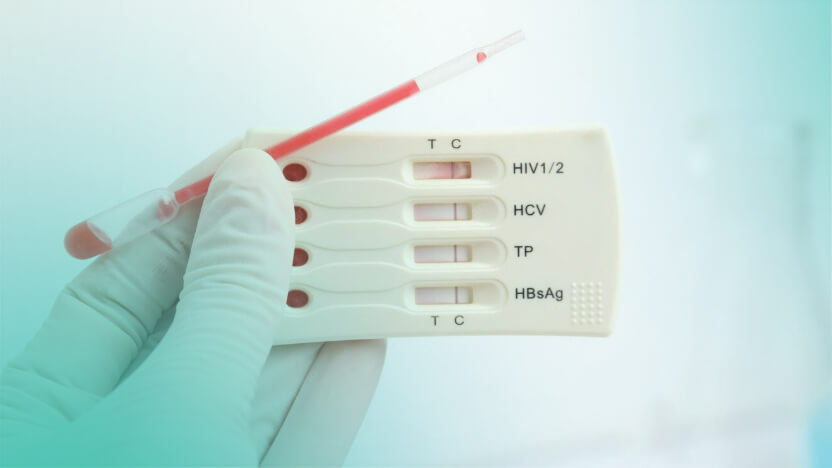
“Waiting in line for two hours for a five-minute consultation, losing pay for time off, and the awkwardness of running into acquaintances — the thought of getting syphilis test at the hospital is enough to make many people hesitate.”
First and foremost: at-home Treponema pallidum test kits approved by the National Medical Products Administration (NMPA) operate on the same detection principles as rapid screening tests used in hospital outpatient settings, rooted in mature Treponema pallidum serology testing systems.
Currently, Treponema pallidum serological testing falls into two main categories: Treponemal tests (TTs) and Nontreponemal tests (NTTs). NTTs are highly prone to false positive and false negative results, carrying a notable risk of missed detection in clinical diagnosis. In contrast, TTs detect Treponema pallidum-specific antibodies (such as IgG and IgM) with higher specificity, making them the cornerstone of accurate diagnosis.
Most mainstream at-home Treponema pallidum test kits use the immunochromatographic assay (colloidal gold method), which falls under the category of TTs. They identify Treponema pallidum-specific antibodies in blood to determine infection status. As Class III medical devices, these kits undergo rigorous clinical validation before market launch. When purchased through official channels, used within their shelf life, and operated strictly according to instructions, they deliver reliably accurate results and serve as a private, convenient screening option.
That said, confidential std testing is only a screening tool. A positive result requires follow-up confirmatory testing at a formal hospital or disease control center; a negative result during the window period should be re-tested after the window period has passed for confirmation.
Why Do Some People Get Inaccurate Results? Common Pitfalls
Much of the distrust toward at-home testing stems from non-standard purchasing and operation practices. The most common causes of inaccurate results include:
- Purchasing uncertified products: Test strips without medical device registration and from unknown sources offer no guarantee of core raw material quality, and are highly likely to produce false positive or false negative results.
- Improper operation: Insufficient blood collection volume, incorrect buffer dosage, or delayed result reading can directly compromise test outcomes.
- Testing during the window period: Treponema pallidum infection is not detectable immediately — there is a 2–4 week window period during which antibody levels are too low to detect, potentially resulting in false negatives.
- Outdated product technology: Reagents using only a single antigen have weak detection capability for certain disease stages and special samples, increasing the risk of missed detection.
Who Is At-Home Testing Particularly Suitable For?
The greatest advantages of at-home testing are privacy and convenience, making it especially well-suited for the following scenarios:
- Individuals who have engaged in high-risk behavior and seek rapid, private self-testing.
- Couples preparing for marriage or pregnancy who wish to complete supplementary screening in advance.
- Health-conscious individuals who conduct regular health screenings and prefer to complete STD screening at home.
- People in remote areas with limited medical resources who face barriers to hospital access.
- Busy professionals who cannot take time off work to wait in hospital queues.
The Core of Accurate Testing: High-Quality Raw Materials
What many people do not know is that the accuracy and stability of a diagnostic product ultimately depend on the quality of its upstream raw materials — antigens. The essence of Treponema pallidum detection is the capture of antibodies in samples via antigens; the specificity, sensitivity, and epitope coverage of these antigens directly determine the reliability of test results. What is treponema pallidum antibody?
For TP antibody detection, TP47, TP15 and TP17 are widely recognized as high-quality candidate antigens. TP47 boasts strong immunogenicity and is a core antigen fragment for early-stage TP antibody detection. Antibodies induced by TP15 persist throughout the entire course of infection, supporting full-cycle monitoring. TP17, abundant in the pathogen’s inner membrane, triggers a strong humoral immune response early in infection and achieves the highest positive detection rate across all stages of Treponema pallidum.
As an enterprise specializing in the R&D, production and supply of IVD core raw materials , cnpair has long been deeply engaged in the Treponema pallidum detection raw material sector. We have comprehensively upgraded our Treponema pallidum product portfolio to address industry pain points. Built on the core antigens above, we offer multiple flexible antigen combination solutions compatible with platforms including colloidal gold, Enzyme-Linked Immunosorbent Assay (ELISA) and Chemiluminescence Immunoassay (CLIA), empowering IVD enterprises to develop higher-performance diagnostic products. CNPAIR Syphilis Raw Material Solutions
At home std test for syphilis, a convenient, private and reliable screening method.
Overall, at-home Treponema pallidum testing is a worthwhile investment in personal health. Its growing adoption encourages more people to proactively seek screening, which is of great significance for Treponema pallidum prevention and control.
Ultimately, the accuracy of at-home diagnostic products relies on the technical foundation of upstream raw materials. Backed by high-performance recombinant antigens, flexible product configurations, strict quality control and mature large-scale production capacity, CNPAIR continues to deliver reliable raw material solutions for Treponema pallidum detection to IVD enterprises worldwide. We collaborate with partners to develop high-sensitivity, high-specificity Treponema pallidum diagnostic products, provide more accurate and reliable diagnostic support for both clinical and at-home screening, and advance the global cause of Treponema pallidum prevention and control.
For more details about our Treponema pallidum raw material products, please contact the cnpair sales team.
More
FAQ
Is at-home STD testing for syphilis actually reliable?
At-home Treponema pallidum test kits approved by the NMPA use the same detection principles as hospital rapid screening tests. As Class III medical devices, they deliver reliably accurate results when purchased through official channels, used within shelf life, and operated strictly according to instructions.
Why do some at-home syphilis tests give inaccurate results?
Inaccurate results most often stem from purchasing uncertified products, improper operation such as insufficient blood volume or delayed reading, testing during the 2–4 week window period, or reagents using only a single antigen.
What determines the accuracy of at-home syphilis test kits?
The accuracy and stability of at-home syphilis tests ultimately depend on the quality of upstream antigens. TP47, TP15, and TP17 are widely recognized as high-quality candidate antigens, and Cnpair supplies flexible antigen combinations for colloidal gold, ELISA, and CLIA platforms.
Contact Us
Please contact us for the latest product information