
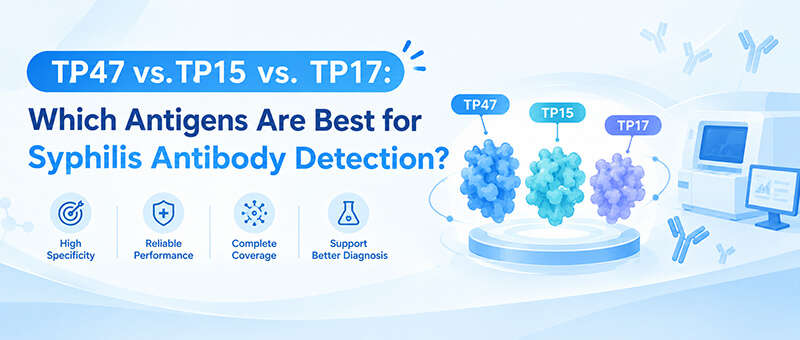
Syphilis remains an important sexually transmitted infection (STI) that requires reliable serological testing for timely diagnosis and disease management. For in vitro diagnostic (IVD) manufacturers, selecting appropriate Treponema pallidum recombinant antigens is essential for developing accurate, stable, and competitive syphilis antibody detection assays.
Among the commonly used antigen targets, TP47, TP15, and TP17 have attracted considerable attention for their immunoreactivity and applications in syphilis serological testing. By combining these recombinant antigen fragments in different configurations, assay developers can optimize assay performance across chemiluminescence immunoassay (CLIA), enzyme-linked immunosorbent assay (ELISA), and other immunoassay platforms.
Cnpair provides flexible Treponema pallidum recombinant antigen solutions, including chimeric antigens, individual TP47, TP15, and TP17 fragments, and bulk reagents to support syphilis IVD assay development.
What is the role of treponema pallidum recombinant antigens in syphilis detection?
Treponema pallidum is the bacterium responsible for syphilis. During infection, the human immune system produces specific antibodies against various treponemal antigens. Detecting these antibodies provides an important approach to identifying exposure to T. pallidum.
Syphilis serological tests are generally divided into two categories:
Treponemal tests (TT): Detect antibodies directed against T. pallidum antigens. These tests are widely used to support syphilis diagnosis and may remain reactive after successful treatment.
Nontreponemal tests (NTT): Detect antibodies against lipoidal antigens associated with tissue damage and infection. These tests are commonly used for disease activity assessment and treatment monitoring but may produce biological false-positive or false-negative results.
Treponemal antibody detection assays commonly use recombinant antigens to provide defined antigenic targets and consistent raw material quality. Compared with less-defined antigen preparations, recombinant antigens can support more controlled manufacturing processes and facilitate assay optimization.
For IVD manufacturers, selecting suitable Treponema pallidum antigens is an important step in developing reliable syphilis treponemal antibody assays. However, no single antigen guarantees early detection or eliminates false results; overall assay performance depends on antigen selection, formulation, assay design, and clinical validation.
TP47, TP15, and TP17: What Are the Key Antigen Targets?
TP47, TP15, and TP17 are established antigen targets used in the development of syphilis serological assays. Each offers distinct immunological characteristics that may contribute to the detection of T. pallidum antibodies.
TP47: A Commonly Used Antigen with Strong Immunoreactivity
TP47 is a widely studied Treponema pallidum antigen known for its strong immunogenicity. Its ability to elicit antibody responses makes it a valuable target in treponemal antibody detection reagent development.
For assay manufacturers, recombinant TP47 antigen can serve as a component in antibody detection systems designed to identify immune responses to T. pallidum. It can also be incorporated into multi-antigen formulations to broaden antigenic coverage.
Potential applications:
- Syphilis antibody detection reagent development
- CLIA and ELISA assay formulation
- Multi-antigen combinations for treponemal serological testing
TP15: Supporting Multi-Antigen Detection Strategies
TP15 is another commonly used T. pallidum antigen in syphilis serological testing. Antibodies against TP15 may be detectable across different stages of infection, making it a useful candidate for combination-based assay development.
Incorporating recombinant TP15 into an antigen panel may help complement the antibody recognition profiles of other targets. Its value is particularly relevant when assay developers seek to optimize the overall performance of a multi-antigen detection system.
Potential applications:
- Multi-antigen syphilis antibody assays
- Recombinant antigen pairing and screening
- Performance optimization for different immunoassay platforms
TP17: An Important Target for Treponemal Antibody Recognition
TP17 is a well-established antigen target in syphilis serology and is frequently included in recombinant antigen combinations. Its immunoreactivity makes it a useful component for detecting antibodies against T. pallidum.
When paired with TP47 or TP15, recombinant TP17 may contribute complementary antibody recognition. The final benefit depends on the specific assay configuration and should be verified through analytical and clinical evaluation.
Potential applications:
- Treponemal antibody detection
- Multi-antigen reagent development
- CLIA, ELISA, and other compatible immunoassay formats
Why Combine TP47, TP15, and TP17?
Different patients may produce different antibody recognition profiles. Using multiple antigen targets can help assay developers capture a broader range of antibody responses than relying on a single target alone.
A combination of TP47, TP15, and TP17 may therefore be considered when developing syphilis antibody assays. The optimal combination should be determined by evaluating antibody reactivity, analytical sensitivity, specificity, background signals, and clinical sample performance. Importantly, early detection of syphilis depends on the development of detectable antibodies as well as assay design. A recombinant antigen combination cannot completely eliminate the serological window period.
Cnpair: Flexible and Stable Syphilis Recombinant Antigen Solutions
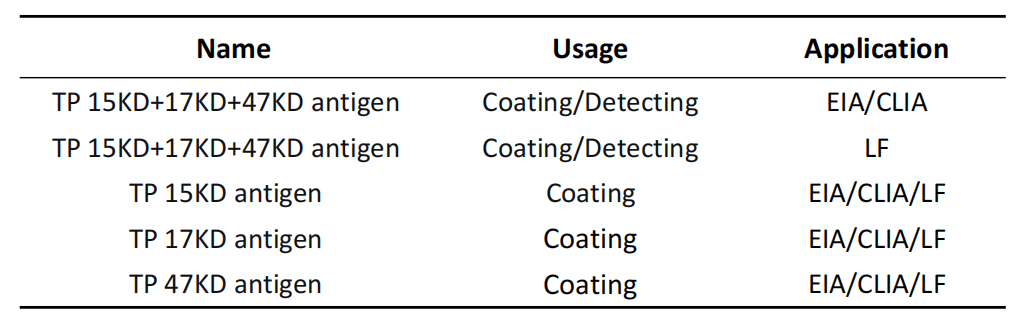
Cnpair is dedicated to development high-quality IVD raw materials for sexually transmitted diseases. We can offer flexible antigen combination options, including both chimeric antigens and single fragment antigens (TP47, TP15 and TP17) as well as bulk reagents, enabling assay manufacturers to optimize assay performance and enhance product competitiveness.
Cnpair Syphilis Antigen Performance
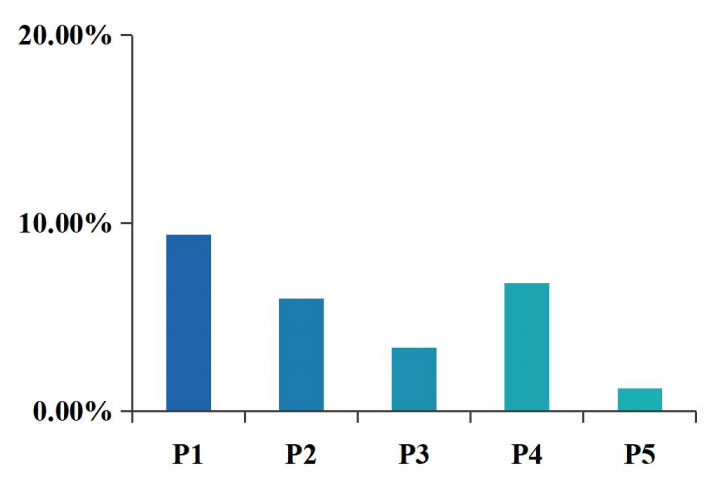
1 Excellent Stability
Maintains consistent performance after 12 days at 40°C, with positive signal variation within 20%, ensuring robust excellent reagent stability.
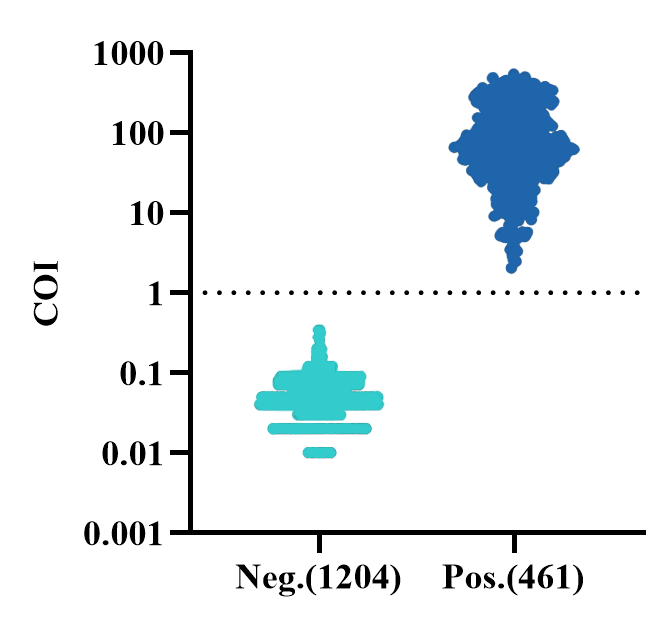
2 Outstanding Specificity
Demonstrated excellent performance on CLIA, both negative (N=1204) and positive (N=461) achieved 100% concordance with clear group separation.
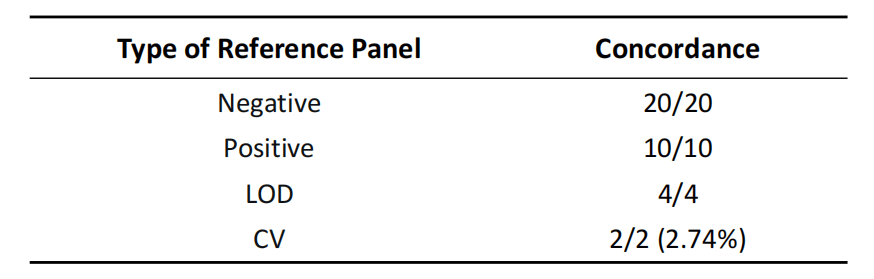
3 Verified with National Reference Panel
Validated with the Chinese National Reference Panel Treponema Pallidum Antibody (Chemiluminescent Testing), Cnpair’s Syphilis antigen achieved 100% concordance.
Antigen National Panel (36 samples in total):
4 Flexible Materials for Diverse Solutions
It is a recombinant protein derived from a selected antigenic target of T. pallidum, used to detect treponemal antibodies in syphilis serological assays.
TP47, TP15, and TP17 are commonly used T. pallidum antigen targets in syphilis antibody detection. They can be evaluated individually or in combination during assay development.
No single antigen is universally best for early detection. Performance depends on antibody development, antigen selection, assay design, and clinical validation. Combining multiple antigens may help broaden antibody recognition.
They can be evaluated for CLIA, ELISA, and other compatible immunoassay formats. Suitability should be confirmed through platform-specific validation.
A recombinant antigen may contain one selected antigenic sequence or fragment. A chimeric antigen combines multiple selected antigenic regions within a single construct. Both approaches can be considered in syphilis assay development.